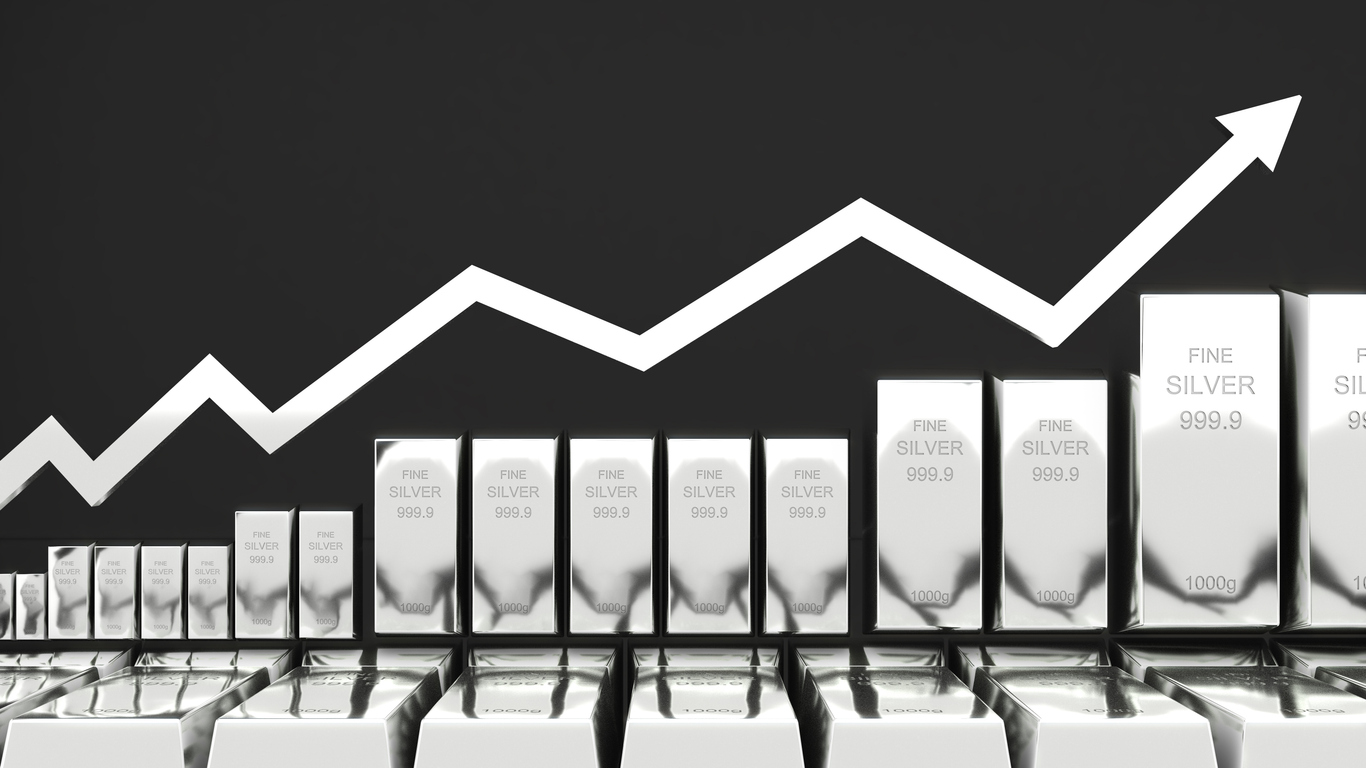
Silver’s remarkable resurgence in recent years has firmly repositioned it as both a strategic industrial metal and a powerful investment asset. The year 2025 marked a historic breakout, with global prices soaring from $28.92 to over $72 per ounce, a 147% annual surge—one of the strongest performances in modern preciousmetal history. This explosive rally was fueled by deep structural supply deficits, record industrial consumption in solar, EVs, and electronics, and renewed investor interest amid expectations of softer monetary policy.
India mirrored this global momentum even more intensely. Domestic silver rates nearly doubled within the year, briefly touching ₹2,50,000 per kg, driven by robust festival demand, currency depreciation, and a spike in imports. Indian silver prices ended 2025 up more than 159%, marking one of the strongest annual gains in decades.
Silver extended its extraordinary rally into early 2026, with Indian prices briefly testing ₹3,40,000 per kg, reflecting sustained domestic demand and tight supply. In global markets, silver surged to $98 per ounce, marking its strongest level of the year and reinforcing bullish sentiment across precious metals.
The Driving Forces Behind Silver’s Spectacular Rally
Silver’s extraordinary surge through 2025 and early 2026 is not the result of a single catalyst but a convergence of deep structural shifts, industrial transformation, investment flows, and macroeconomic changes. The rally reflects how silver has evolved from a traditional precious metal into a strategically indispensable industrial commodity.
1. Structural Supply Deficits Tighten the Global Market
Silver’s exceptional rally is rooted in a deep and persistent global supply deficit that has strained the market for five consecutive years. The World Silver Survey 2025 confirms a cumulative deficit of 796 million ounces between 2021 and 2025, a figure nearly equal to one entire year of global mine output. This shortage has been exacerbated by sluggish mineproduction growth, largely because 70% of silver is produced as a by-product of lead, zinc, and copper mining, making supply relatively insensitive to price spikes. As inventories tightened and supply growth stagnated, silver became increasingly vulnerable to demand surges, laying a firm foundation for the dramatic price rally.
2. Industrial Demand Reaches Record Highs
Beyond structural constraints, silver’s rally has been propelled by explosive industrial demand that has expanded far beyond traditional usage. Industrial fabrication hit an alltime high in 2024, and the momentum continued strongly into 2025. Silver’s unmatched electrical and thermal conductivity, reflectivity, and versatility make it indispensable in emerging technologies. Compared with previous years, industrial uptake has accelerated significantly, with applications becoming more widespread and technologically sophisticated. This represents a sharp departure from earlier decades, when silver’s industrial demand was steadier and less tied to highgrowth sectors.
3. Technological Transformation Accelerates Silver Consumption
In 2024 and 2025, solar photovoltaics, electric vehicles, semiconductor advancements, and AIdriven infrastructures drastically reshaped the demand landscape for silver. The solar PV sector consumed over 197 million ounces in 2024, and growth is expected to continue as countries scale renewableenergy capacity. The shift to electric vehicles has intensified silver consumption further, as EVs require up to twice as much silver compared to internal combustion engine vehicles due to advanced circuitry, sensors, and safety systems. Meanwhile, rapid expansion in 5G networks, semiconductor manufacturing, and AIpowered devices has added entirely new layers of demand, making industrial usage far more robust and diversified than ever before.
4. SectorWise Breakdown Reveals BroadBased Industrial Strength
Silver’s industrial relevance extends across a wide range of sectors. Solar photovoltaics now represent the largest industrial consumer of silver due to its crucial role in conductive pastes that boost cell efficiency. The automotive sector, particularly EVs, has sharply increased usage of silverdependent electronic components. Electronics and semiconductors rely heavily on silver for circuit boards, microchips, and communication hardware, with demand rising sharply due to AI and cloud computing. In healthcare, silver’s antimicrobial properties support its use in medical devices, wound care, and sterilization technology. Telecommunications infrastructure, especially in highbandwidth systems, continues to require silver for connectors and fiberoptic technologies. Finally, traditional industrial applications—including soldering materials, catalysts, and brazing alloys—provide steady demand. Collectively, these sectors have created a broadbased industrial backbone for silver unlike anything seen in previous cycles.
5. Investor Demand Surges Amid Economic Uncertainty
Investor interest has returned as a powerful catalyst in silver’s upward trajectory. Silverbacked ETFs experienced strong inflows in 2025, reversing earlier outflows and pushing investment demand sharply higher. Expectations of U.S. Federal Reserve rate cuts heading into 2026 weakened the dollar and increased the appeal of precious metals. As gold prices reached elevated levels, investors shifted toward silver as a more accessible and highly reactive alternative. This renewed investor appetite amplified momentum driven by industrial and structural forces, solidifying silver’s dual identity as an industrial metal and safehaven asset.
6. Geopolitical and Macroeconomic Pressures Amplify the Rally
Global geopolitical uncertainties, including conflicts in Eastern Europe and the Middle East, have strengthened silver’s safehaven allure. Trade tensions and inflationary pressures added further tailwinds, pushing investors to diversify through hardasset hedging. In India, a weakening rupee magnified global price increases, causing domestic prices to surge even more sharply than their international counterparts. Tight physical supply, longer delivery cycles, and rising premiums reported by Indian refiners and wholesalers further intensified upward pressure on prices, reinforcing silver’s momentum.
Silver Supply–Demand Outlook for 2026 and NearTerm Rally Prospects
The silver market entered 2026 with tight fundamentals and elevated price momentum, shaped by a multiyear structural deficit and accelerating industrial consumption. According to Metals Focus and industry assessments, silver is projected to remain in another year of supply shortage. Despite the reduction, market remains in an entrenched multiyear deficit, with mine supply unable to keep pace with rising industrial and investment demand. Declining ore grades, constrained output in major producing regions, and the dominant role of by-product mining continue to limit production growth.
On the demand side, industrial usage, particularly from solar photovoltaics, electric vehicles, electronics, and semiconductors, is expected to strengthen further in 2026. With more than half of global silver demand tied to industrial applications, the metal remains uniquely positioned compared to other precious metals. Increasing interest from investors seeking protection against inflation, monetary easing, and geopolitical uncertainty, is creating a dual demand engine that tightens the supply–demand balance.
Inventory pressures are likely to persist. Reports indicate that global exchanges, including COMEX and LBMA, are facing shrinking aboveground stocks, a trend expected to continue given constrained mine output and increasing physical offtake. There are also expectations of the possibility of severe physical tightness due to papermarket stress and strong delivery demand.
Silver as a Critical Mineral: LongTerm Supply Impact
The elevation of silver to the critical/strategic minerals list by major economies, along with China’s decision to restrict silver exports, poses significant long term implications for global supply stability. China’s reclassification has already fractured traditional trade flows by tightening outbound shipments, exacerbating an already fragile supply chain during a period of structural deficits and shrinking inventories.
With the global silver market entering 2026 in a multiyear deficit cycle and mine output unable to scale meaningfully, these export controls deepen supply risk and intensify competition for available metal. Forecasts indicate that the deficit will persist through 2026, reflecting chronic underinvestment, declining ore grades, and prolonged project timelines.
As export restrictions remove a major supplier from the global pool, consuming nations may be forced to increase recycling, diversify sourcing, or develop new mines—all slow and capitalintensive pathways. This shift ensures a tighter, more volatile supply outlook, underpinning structurally higher silver prices and accelerating silver’s transformation into a strategic asset across energy, technology, and defense industries.
Silver Price Outlook for 2026
Silver enters 2026 with strong bullish momentum supported by persistent structural deficits, tightening inventories, and expanding industrial demand. Given these dynamics, most outlooks remain bullish for 2026. Forecasts suggest average annual prices in the mid to high US$50s to low US$60s per ounce, with more bullish scenarios projecting higher levels if supply constraints worsen or investor flows intensify. The structural deficit, expanding industrial use, and macroeconomic uncertainties collectively indicate that the silver rally is likely to continue in the near future, with volatility but an overall upward bias.
On the domestic side, with the rupee remaining weak, physical and investment demand strong, and global supply constrained, Indian silver prices are likely to stay in the ₹2,00,000–₹4,00,000/kg band, potentially exceeding this range if global tightness deepens.
Investor Actions to Safeguard Against Volatility
Silver has historically demonstrated far greater volatility than gold, making strategic portfolio positioning essential. Shrinking COMEX and LBMA inventories, increased physical delivery demands, and fragmented global trade (following export restrictions from major economies like China) may continue to drive price swings. Investors typically manage such volatility through diversification, allocating a portion of holdings to physical silver while using ETFs for liquidity and futures contracts for hedging. In addition, disciplined risk management is crucial given silver’s sharper price movements and sensitivity to macro signals such as interest rates, geopolitical tensions, and currency debasement.
Is Buying at Current Levels Recommended?
Current market conditions suggest that silver remains in a structurally bullish longterm cycle, supported by deficits, rising industrial use, and strategic mineral reclassification. Most outlooks maintain an upward bias for 2026, with supply constraints unlikely to ease quickly. However, given its volatility, it is recommended to accumulate silver gradually rather than entering aggressively at elevated price points. Longterm investors with a multiyear horizon may still find value due to silver’s strong industrial tailwinds and constrained supply environment, but short-term traders should prepare for sizable fluctuations. Expert commentary underscores that while upside potential remains significant, prudent position sizing and hedging strategies are essential.