
The first round of US–Iran talks held in Switzerland on 22nd June and signing the interim deal brought some relief to the ongoing geopolitical tensions in the Middle East. A tentative breakthrough saw the United States grant Iran a 60-day sanctions waiver under an emerging peace framework, helping to calm what had become the most severe maritime disruption in modern history. The episode underscored the fragile foundations of the global economy, with the Strait of Hormuz, one of the world’s most vital chokepoints, at the centre of the crisis. As nearly one-fifth of global oil flows through this narrow passage, its disruption triggered a cascading effect across energy markets, supply chains, and inflation, highlighting how quickly localized conflicts can reverberate worldwide.
The immediate consequence of the crisis was a sharp spike in crude oil prices, driven by fears of prolonged supply shortages. With over 14 million barrels per day of Middle Eastern output curtailed, industries worldwide were forced into a reactive mode, cutting production, absorbing rising costs, and navigating logistical bottlenecks. Shipping costs soared as freight rates climbed alongside fuel prices. Manufacturing sectors, particularly those dependent on petrochemicals and energy-intensive processes, saw margins squeezed. Meanwhile, emerging markets that rely heavily on imported energy felt acute balance of payments pressure, amplifying global economic instability.
Inflation surged globally as higher energy costs filtered through to end-user goods. This environment created an unusual market dynamic: instead of benefiting from inflationary hedging behaviour, precious metals like gold and silver weakened. Aggressive monetary tightening by central banks, particularly in the United States and Europe, raised real interest rates, diminishing the appeal of non-yielding assets. As a result, gold and silver prices demonstrated an inverse relationship with crude oil, diverging from historical patterns.
The strategic breakthrough: US-Iran agreement
Amid mounting economic strain, the US–Iran negotiations in Switzerland marked a pivotal turning point. The agreement signalled a de-escalation of geopolitical tensions and introduced a pathway toward restoring stability in global energy markets. Tehran’s confirmation that it had secured waivers for continued oil and petrochemical exports significantly eased market anxiety. The reopening of the Strait of Hormuz, coupled with the lifting of U.S. naval restrictions, effectively eliminated the immediate threat to global oil flows. This development is widely regarded as a resolution to what had become the largest oil supply disruption in history.
Under the memorandum of understanding, Iran is poised to immediately resume oil exports, bolstered by sanctions relief that extends to essential enablers such as banking, shipping, and insurance. This marks a significant turning point for a sector that has been constrained by US sanctions for over four decades, with restrictions on Iran’s energy industry evolving since 1979. Importantly, the past eight years have been particularly restrictive. Following the full reimposition of sanctions in 2018 under the “maximum pressure” campaign, Iranian oil exports were severely curtailed, limiting the country’s access to global markets and financial systems. The current interim deal lays the foundation for broader negotiations on Iran’s nuclear program and the longer-term normalization of trade, signalling a potential reintegration of Iranian oil into global energy markets.
The significance of Iranian oil returning to the market
The re-entry of Iranian oil into the global supply chain is arguably the most consequential outcome of the agreement. Iran holds among the world’s largest proven oil reserves and has long been a key exporter; its reduced presence during periods of heightened tension created a supply shortfall that contributed to increased price volatility. According to the International Energy Agency, Iran’s sustainable crude oil production capacity is estimated at around 3.8 million barrels per day.
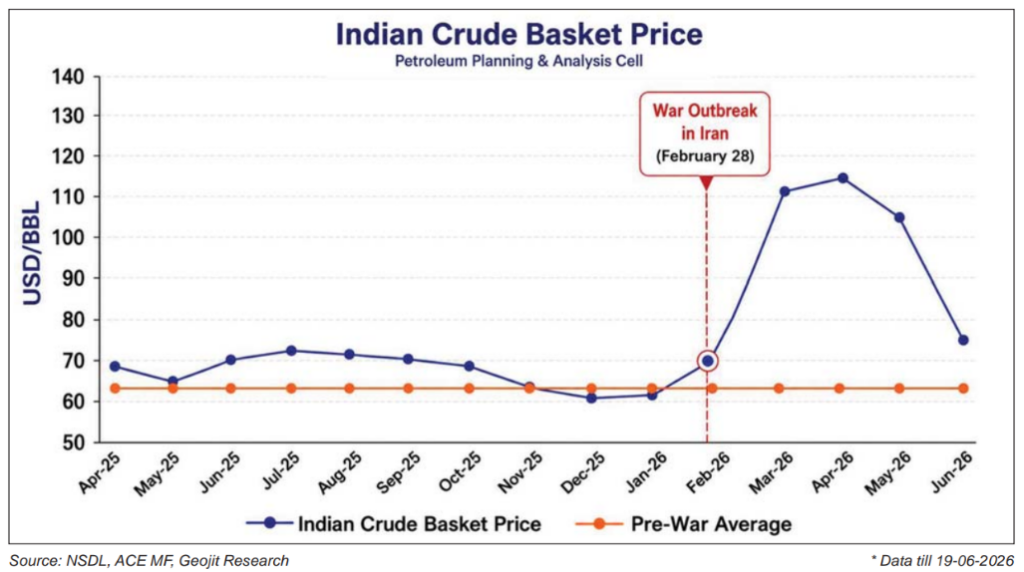
With sanctions easing, Iran’s return brings additional supply to the market, easing constraints and lowering the risk premium in oil prices. This helps meet global demand more reliably, especially during economic recovery. The increased supply is already pressuring crude benchmarks, with Dubai crude shifting into contango, indicating expectations of surplus and improved market stability. Sanctions relief also streamlines trade, allowing Iranian oil to access more buyers. Improved banking and insurance support enhances competition, boosts efficiency, and creates stronger arbitrage flows across Asian, European, and US markets.
The aftermath of the agreement has already begun reshaping crude market behaviour. Weak refining demand in Asia, especially from China, combined with the anticipated influx of Iranian supply has led to softer regional pricing. The decline in Dubai crude premiums, from over USD 2 per barrel to a discount, underscores the magnitude of the shift. This transition to contango also encourages storage and inventory builds, further reinforcing the perception of ample supply. Traders are increasingly exploiting geographic price differentials, exporting Middle Eastern crude to distant markets where demand remains stronger. According to the International Energy Agency, the global oil market is expected to recover gradually from the Strait’s closure before shifting into a significant surplus by 2027.
Indian Scenario
India stands to benefit significantly from the return of Iranian oil and the resulting softening of global crude prices, particularly through its impact on the current account deficit (CAD). As one of the world’s largest net importers of crude oil, India’s import bill is highly sensitive to price fluctuations; lower oil prices directly reduce the cost of imports, thereby narrowing the trade deficit, the largest component of the CAD. The resumption of Iranian oil exports also offers India access to a historically favourable supplier, often providing discounted barrels and flexible payment mechanisms, further easing external payment pressures. A reduced CAD strengthens macroeconomic stability, supports the rupee, and lowers vulnerability to external shocks, while creating fiscal space for growth-oriented spending. In this context, the normalization of Iranian oil flows not only alleviates inflationary pressures domestically but also plays a critical role in improving India’s external balances and overall economic resilience.