
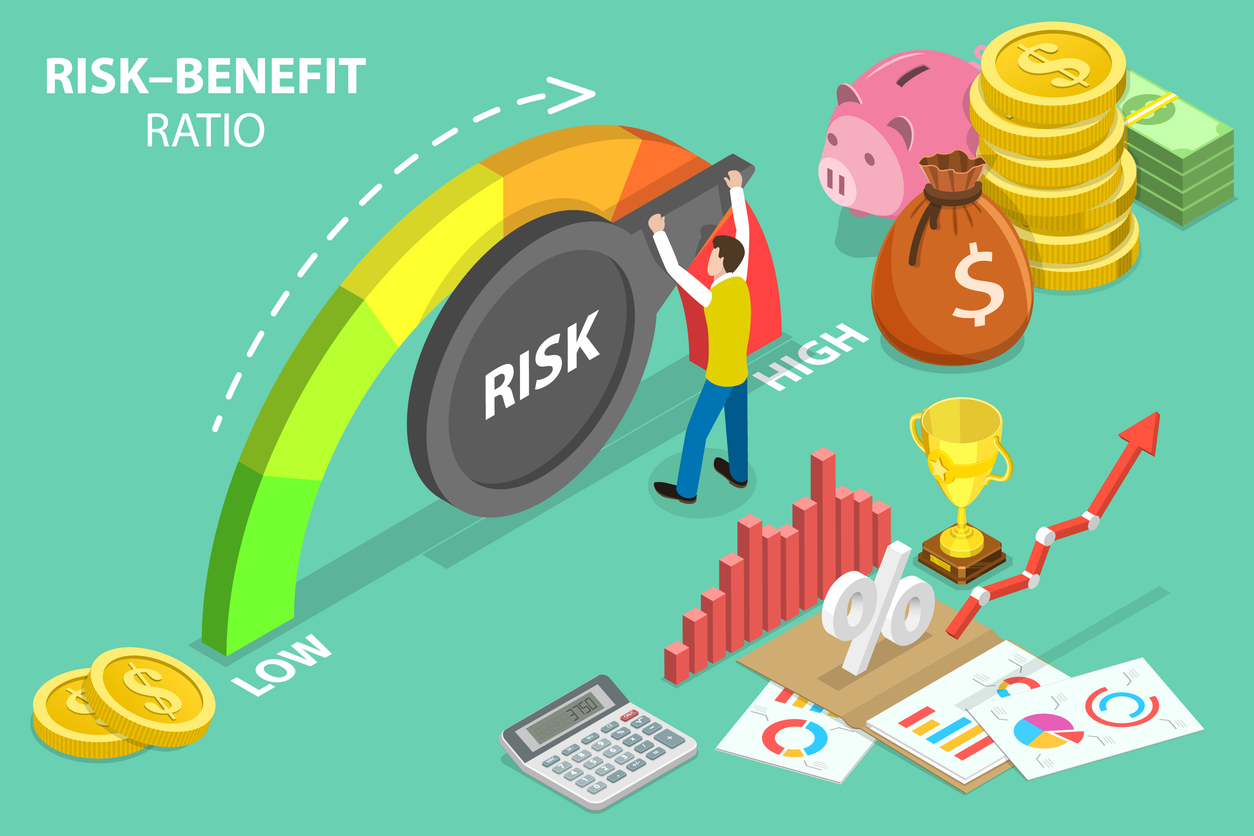
A few years ago, Anil made a decision that felt like a perfectly logical decision. His colleague mentioned a small-cap mutual fund that delivered 22% returns and Anil decided to invest a large chunk of his savings into it. Three months later, the fund corrected its market value, and the value of the fund fell, and Anil decided to wait it out, but after a while he panicked and redeemed at a loss.
While redeeming, Anil thought it was a wise decision, so he acted based on his risk tolerance. But in hindsight, did Anil think it was an impulsive decision to redeem at a loss?
Let us analyse two concepts: risk tolerance and your risk capacity, that sound nearly identical but are fundamentally different. Making this distinction incorrectly is one of the most expensive errors one can make as an investor.
What is risk tolerance?
Risk tolerance is the level of uncertainty you can emotionally handle when your investments fluctuate. It’s that feeling in your stomach when you open your portfolio app and see a 15% drop.
Your risk tolerance is influenced by your personality, past financial experiences, sociocultural norms, and even by how financial distress was managed in your family during your childhood. You may have observed that numerous middle-class families have traditionally preferred fixed deposits and gold instead of equities. As a result, a significant number of investors may inherit a highly conservative financial outlook, even though their financial circumstances could accommodate more adventurous investments.
What is risk capacity?
Risk capacity, on the other hand, is entirely objective. It is determined by your financial situation, not your feelings. It’s the amount of financial risk you can afford to take without jeopardising your essential goals.
Several factors shape your risk capacity.
- Your investment time horizon matters enormously. If you are investing for a goal that’s 15 years away, short-term market volatility becomes largely irrelevant to your outcome.
- Your income stability plays a pivotal role. For example, government employee with a stable salary, would have a higher risk capacity than a freelancer with variable earnings.
- Having an adequate emergency fund and insurance cover is important too. If you have six months of expenses safely parked in a liquid fund and a robust health policy in place, your investment portfolio can afford to ride out rough patches.
- Existing liabilities, such as a home loan EMI, also reduce your capacity to absorb investment losses.
The mismatch that costs you money
Trouble arises when these two things are out of sync.
High tolerance, low capacity:
You are emotionally comfortable with risk, but your financial situation doesn’t allow for losses. This leads to investing short-term money in volatile assets. The result is forced selling at the worst possible time.
Low tolerance, high capacity:
You have a solid financial base and a long-term horizon, but fear keeps you confined to fixed and recurring deposits. Over 20 years, the inflation-adjusted returns from such instruments can reduce wealth in real terms. This is a quiet, invisible risk that rarely makes headlines but affects millions of Indian savers.
The goal of sound investing is to align these two, or more precisely, to let risk capacity define your investment strategy while working to understand and gradually expand your risk tolerance over time.
A practical framework for Indian mid-career investors
Start by mapping your financial reality. List your goals, your child’s education, a home purchase, retirement, and assign a timeline to each.
- Goals within three years demand capital preservation; investing in equity may not help meet your goals.
- Goals between three and seven years can accommodate hybrid or balanced funds.
- Goals beyond seven years, particularly retirement, can sustain a larger equity allocation.
Once you’ve segmented your goals, assess your risk capacity for each pool of money independently. If the allocation that your financial situation supports makes you overwhelmed, begin with a more conservative mix and build exposure gradually. Starting a systematic investment plan (SIP) in an equity fund is a psychologically easier entry point than a lump-sum investment. It also builds the experience and confidence that naturally expands risk tolerance over time.
Finally, revisit this exercise annually or whenever your life changes significantly. A job switch, a salary increment, a new loan, or a family addition all shift your capacity and tolerance.
Conclusion
Smart investing isn’t about chasing the highest return or playing it as safely as possible. It’s about making decisions that you can stick to; decisions that your finances can support, and your emotions can sustain. Knowing the difference between what you’re comfortable losing and what you can actually afford to lose is the foundation on which every sound investment plan is built.
Build a clear framework: short-term savings in liquid funds, medium-term goals in balanced advantage funds, and long-term retirement savings in a diversified equity SIP. You don’t need a higher risk tolerance; you need a better understanding of your risk capacity.